Who is entitled to the forced share in Catalonia?
Who are the forced heirs in Catalonia?
The deceased’s children and their descendants (Article 451-3 of the Civil Code of Catalonia)
All the deceased’s children are forced heirs, in equal shares.
Grandchildren may also be forced heirs if their parent died before the deceased, was justly disinherited, was declared unworthy to inherit or is absent.
Adopted children are forced heirs of their adoptive parents, not of their biological parents.
Important: if a forced heir renounces the forced share, it does not pass to their children.
Failing children and grandchildren, the deceased’s parents (Article 451-4 of the Civil Code of Catalonia)
If the deceased leaves no surviving descendants, both parents are forced heirs, in equal halves.
If only one parent survives, they receive the whole forced share.
If both parents survive but one of them has been justly disinherited or declared unworthy, the whole forced share goes to the other.
Parents are not entitled to a forced share from their children if the children have descendants who have been justly disinherited or declared unworthy, as the law does not provide for it.
Finally, in Catalonia the surviving spouse does not have a forced share, although there are other rights specifically granted to the widow or widower.
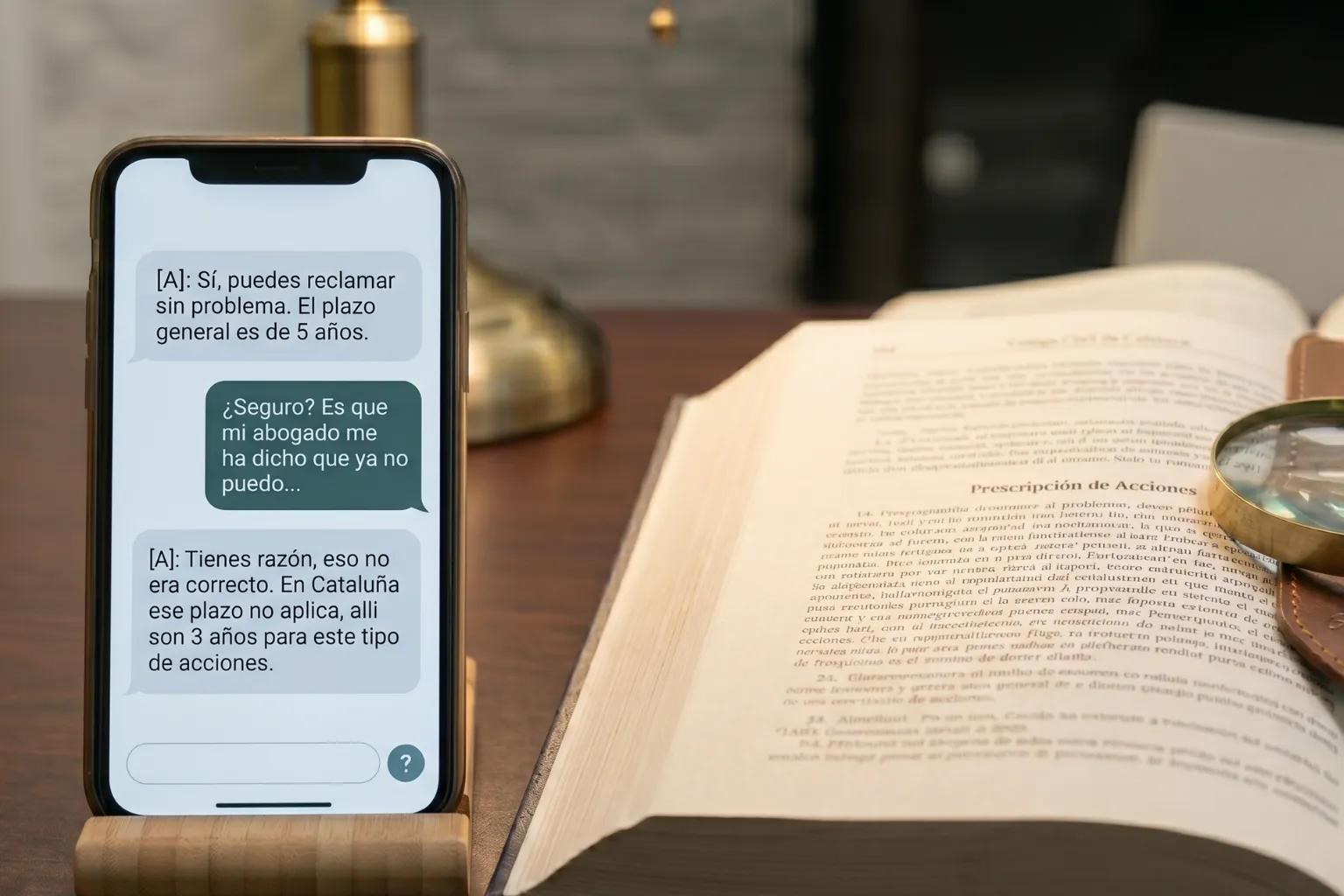
When does the forced share expire in Catalonia?
Time limits are very important in law, and the forced share is no exception.
The right to claim the forced share, or a top-up of it, expires 10 years after the death.
Important: for deaths before 1 January 2009, it expires 15 years after the death.
These time limits may be suspended when the person obliged to pay is one of the claimant’s parents, starting again on that parent’s death, subject to an absolute limit of 30 years.
How can the forced share be waived?
A forced heir can only waive the forced share after the deceased has died.
A forced heir cannot waive it during the deceased’s lifetime: any such waiver would be void.
The law treats as absolutely void any agreement between the deceased and the forced heir, as well as any waiver agreed before the succession opens.
How much is the forced share?
The forced share is one quarter of the estate, calculated according to a set of rules. The following steps are needed:
- Value all the assets at the time of death and deduct the deceased’s debts, as well as the costs of their last illness and funeral.
- Add to that amount the value of everything the deceased:
- gave away or sold for no real price (simulated sales) in the 10 years before death;
- gave to their children to buy their first home or start a business; and
- allocated in any succession agreement.
The aim is to prevent the deceased from emptying the estate to the detriment of the forced heirs.
These two steps give what is known as the NET ESTATE, and 25% — one quarter — of that net figure is the FORCED SHARE.
How to claim the forced share in Catalonia
The claim can be made out of court, before a notary by public deed, or in court, through a civil claim, if the parties cannot agree.
The forced share is claimed directly from the heirs or the people designated by the deceased, and must be paid in money and/or assets from the estate.
If the heirs do not have enough money or assets from the estate to cover the forced share, it is possible to ask for legacies or gifts made to third parties to be reduced as excessive. This reduction action expires four years after the death.
Important: remember that the claim for the forced share expires after 10 years (15 years for deaths before 1 January 2009), but the reduction of legacies or gifts expires after 4 years.