
Artificial intelligence and the law: when an answer is not enough
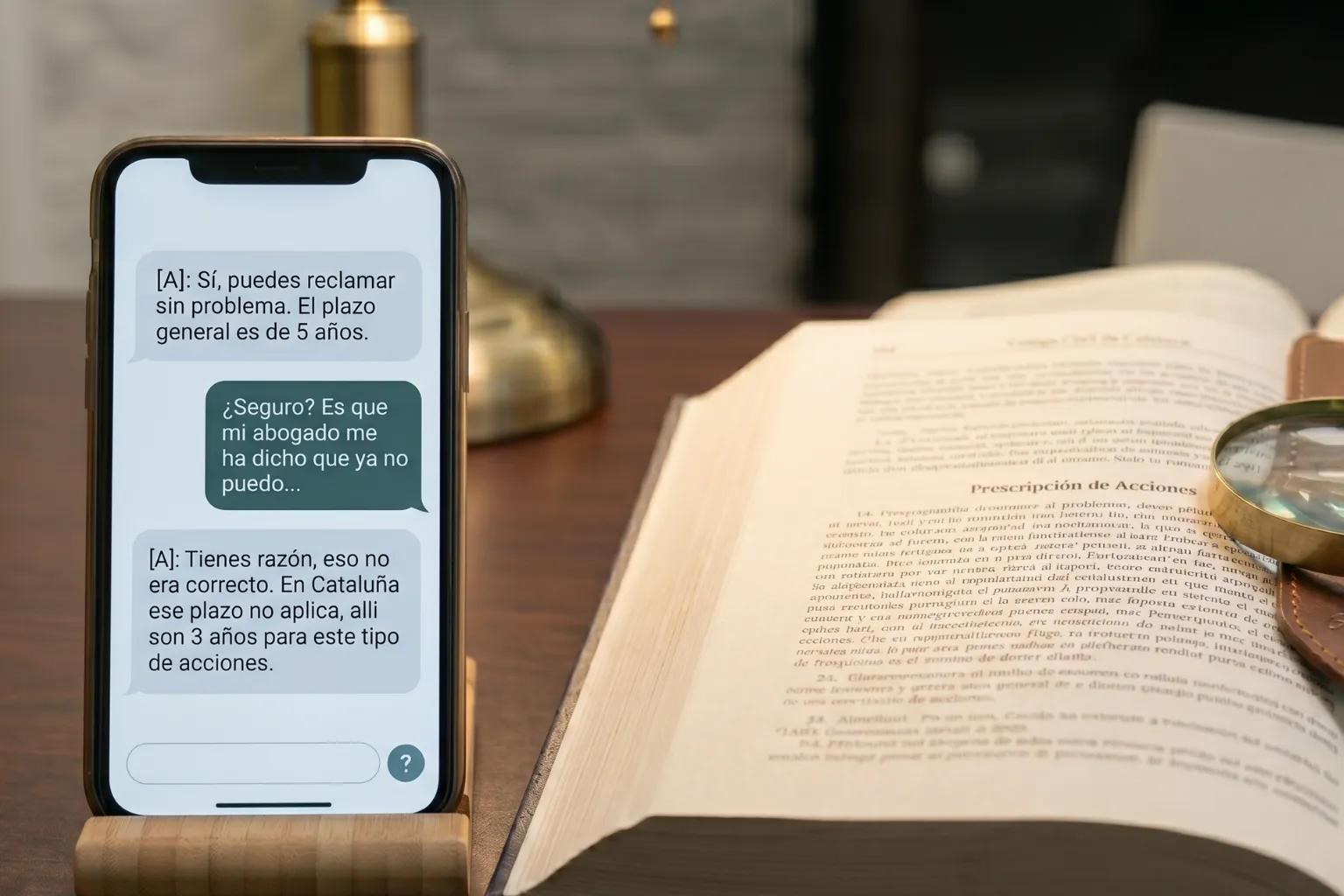
More and more people turn to artificial intelligence to answer legal questions about contracts, dismissals, tenancies or inheritances. It is quick and convenient, and the answers often sound clear and convincing. At the office we now regularly hear things like “the AI told me it works like this” or “I checked my case and I’m entitled to make a claim”.
The problem is that, in law, things are rarely that simple, and taking automatically generated information at face value can lead to serious mistakes.
A general answer is not a real case
Artificial intelligence works with global data, but our day-to-day experience shows that the law always depends on people and their circumstances. An AI answer may look flawless on screen and still be of no use in your situation. The same problem can change completely depending on details that an algorithm cannot weigh up:
- Where you are: the law is not the same everywhere. Civil law in Catalonia, for example, has very specific features that do not exist in Madrid or in other regions of Spain.
- The small print: your history, your background and what the courts are deciding today are precisely what tips the balance between winning and losing a case.
That is why, when someone comes to see us and shows us “what the AI said”, we almost always have to qualify it, bring it down to earth or take a completely different approach.
The value of professional judgement
The problem is not using technology, but relying on it as if it were complete legal advice. AI is useful for understanding basic concepts, but it lacks context and accountability. A lawyer does not only interpret the law: they apply it, weighing up the risks of each decision and taking legal responsibility for the strategy.
Conclusion
Behind every legal problem there is a personal situation that no algorithm can fully assess. In law, the difference between a generic explanation and a sound solution is decisive. Before making an important decision about your family or your assets, the safest step will always be to check the information with a professional.